
Wood, stone, linen, wool, and natural woven materials have one huge advantage—they age well. Instead of making your interior design a slave to fleeting trends, they allow you to create a space that remains timeless for years and often gains even more character over time.
In interior design, however, we value natural materials not only for their appearance. They bring a variety of textures, warmth, and imperfection into the home—qualities that are hard to find in perfectly uniform, synthetic surfaces.
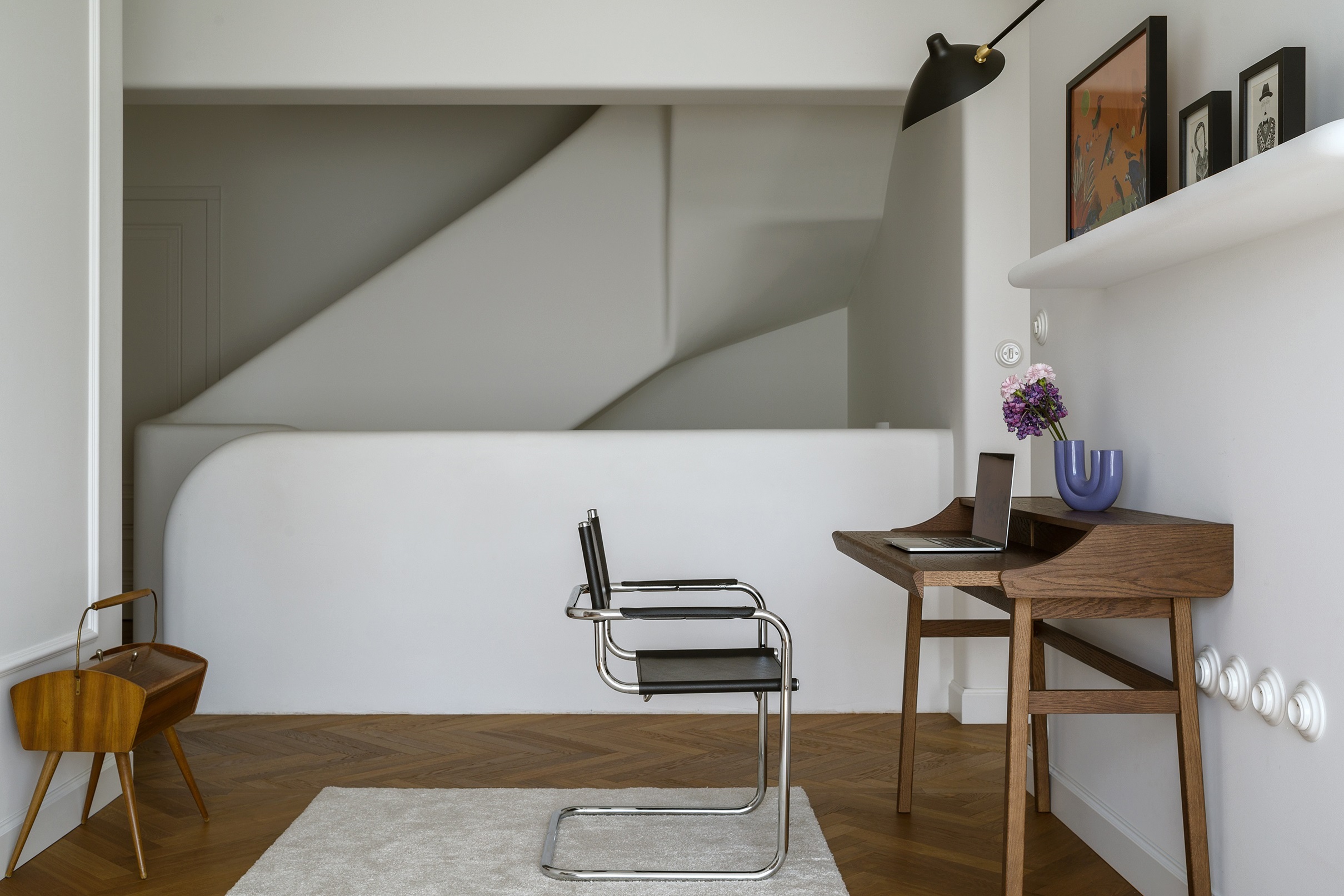
How can they be used in contemporary interiors? A good example is our “House with Curves” in Warsaw, where natural materials have become one of the most important elements of the entire concept.
1. Natural materials create a timeless foundation
Interior design trends change quickly, so when designing a house or apartment, it’s a good idea to base the most important elements on materials that aren’t tied exclusively to a single season.
Natural wood and veneer, stone, linen, and wool have been part of architecture for generations, yet they also fit perfectly into contemporary interiors.
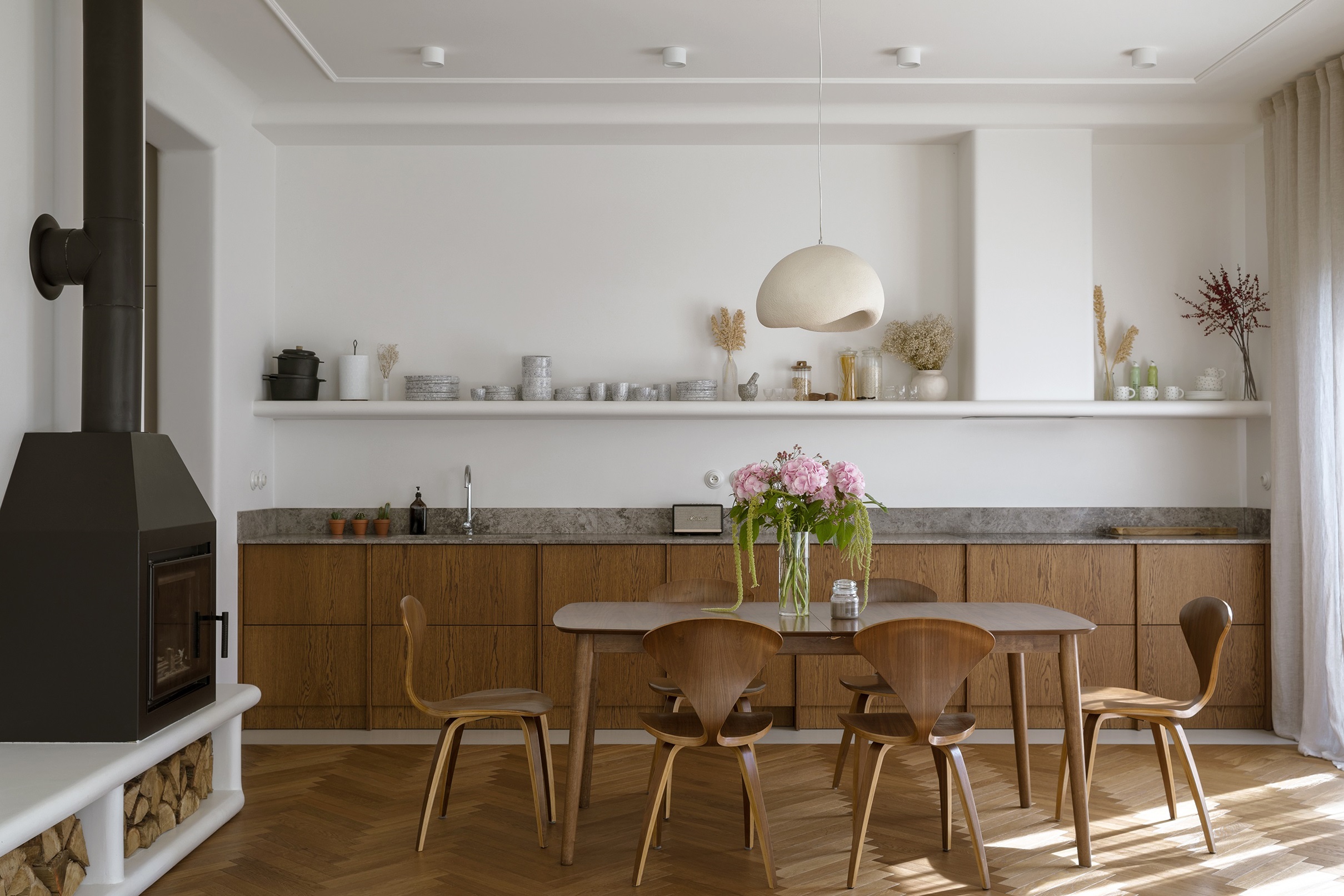
That’s exactly why we like to use them as the foundation of a design. A wooden floor, a stone countertop, or well-crafted veneered cabinetry can remain in an interior for many years. By later changing the lighting, textiles, or individual pieces of furniture, you can give the space a new character without having to undertake another major renovation.
A good interior designer should approach a project not only from the perspective of what looks good today, but also how the interior will function and look in a few or several years.
2. Wood adds warmth to a modern interior
Wood is one of the most versatile materials used in interior design and furniture. It can be found on floors, stairs, walls, cabinet fronts, or in individual pieces of furniture.
This doesn’t necessarily mean a rustic or Scandinavian interior. The right type, shade, and finish of wood harmonize perfectly with minimalist architecture.
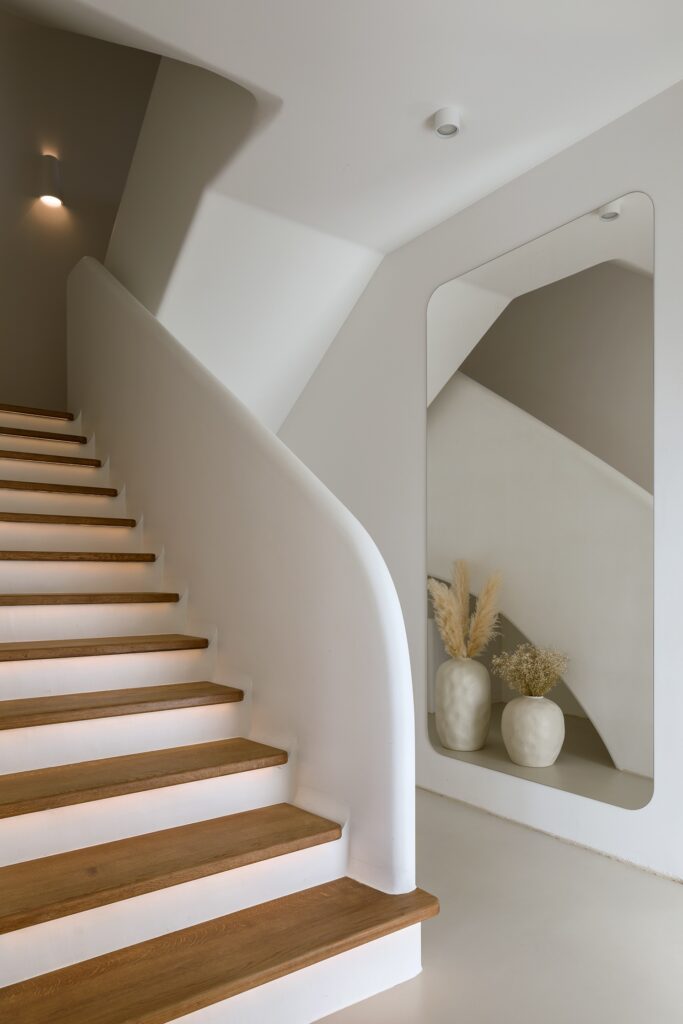
In our “House with Rounded Edges,” we’ve paired wood with light, serene surfaces and the soft lines of the architecture. It appears, among other places, on the steps of the sculptural staircase, whose rounded edges emphasize the central theme of the entire project.
The natural grain ensures that even with a very understated color palette, the interior never feels cold or sterile.
3. Stone and mineral surfaces add depth to an interior
Natural stone is a material that can be both minimalist and decorative. Each slab has a slightly different pattern, which is why a countertop, coffee table, or bathroom fixture made from it becomes one-of-a-kind.
In modern designs, we also like to combine stone with mineral surfaces, such as microcement. It allows us to create large, nearly uniform surfaces and minimize the number of visible seams.
In the House with Rounded Edges, microcement appears, among other places, in the bathrooms, where it seamlessly connects surfaces and highlights the organic shapes of countertops and built-in cabinetry. Pairing it with wood and natural fabrics ensures that the minimalist interior remains warm and inviting.
This is a good rule to follow in other projects as well: materials with a cooler, mineral-like character should be balanced with surfaces that introduce warmth both visually and tactilely.
4. Linen, wool, and natural fabrics create a certain atmosphere
Natural materials aren’t limited to floors, countertops, and built-in furniture. Fabrics also have a huge impact on how an interior is perceived.
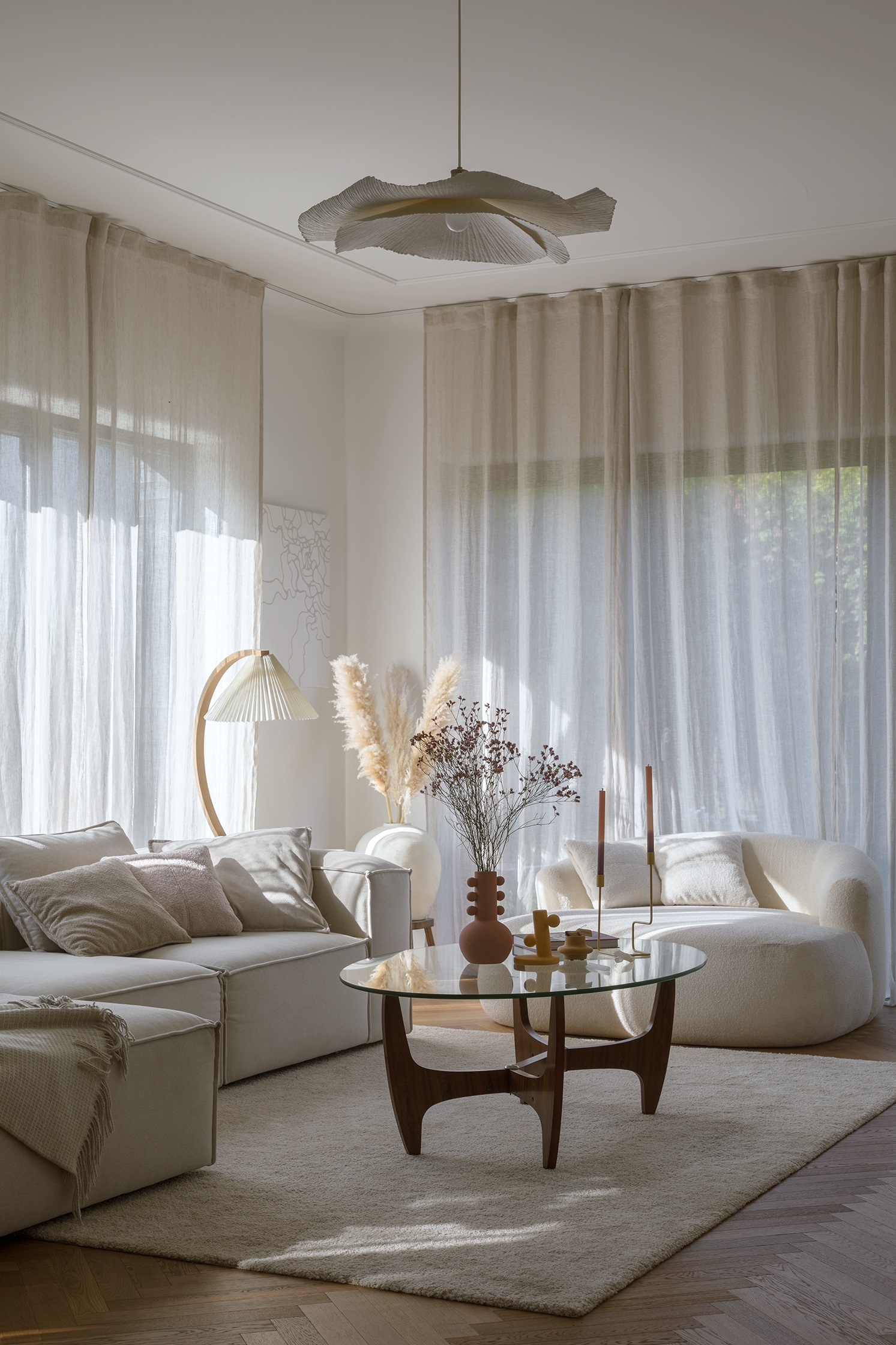
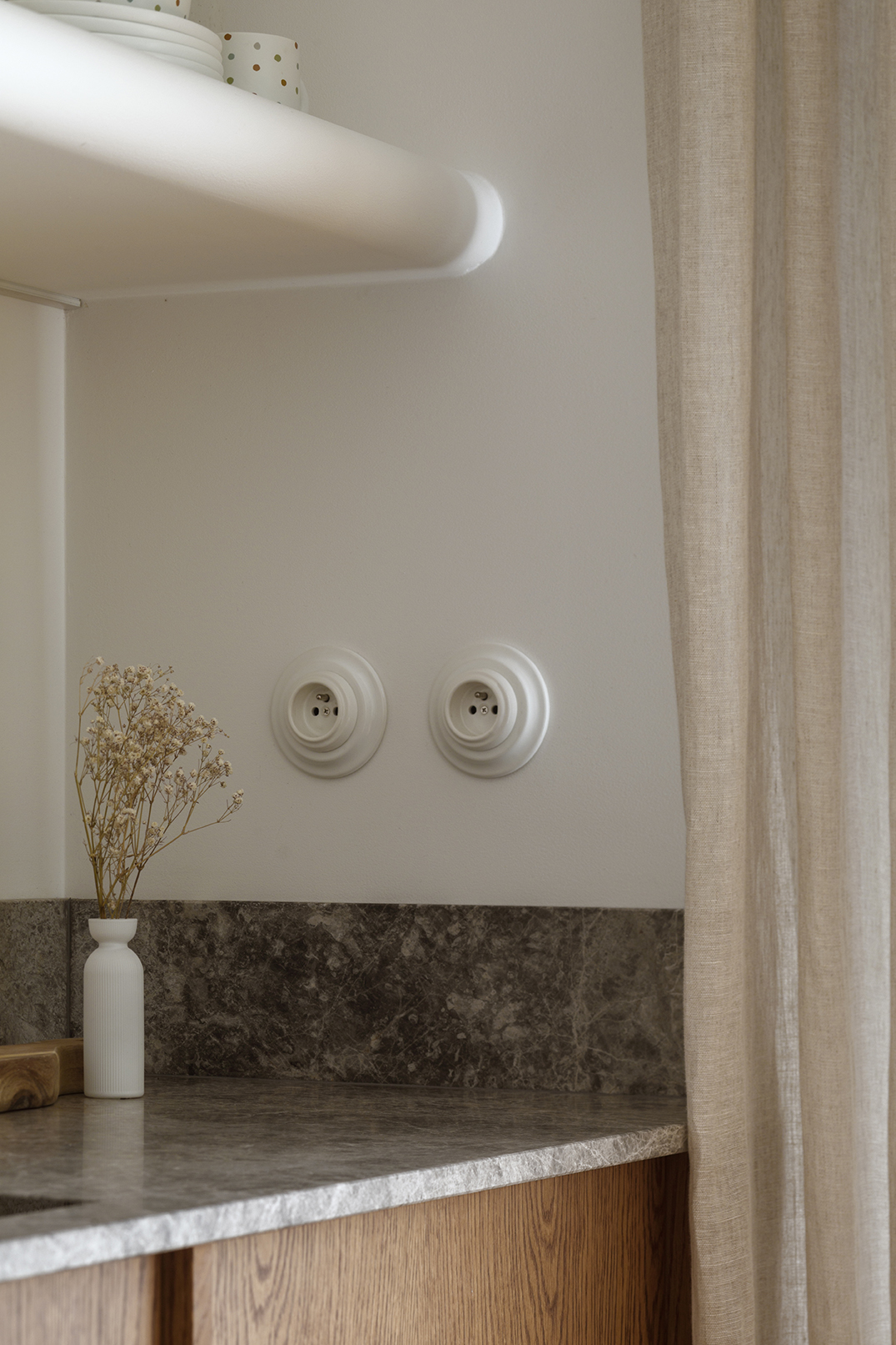
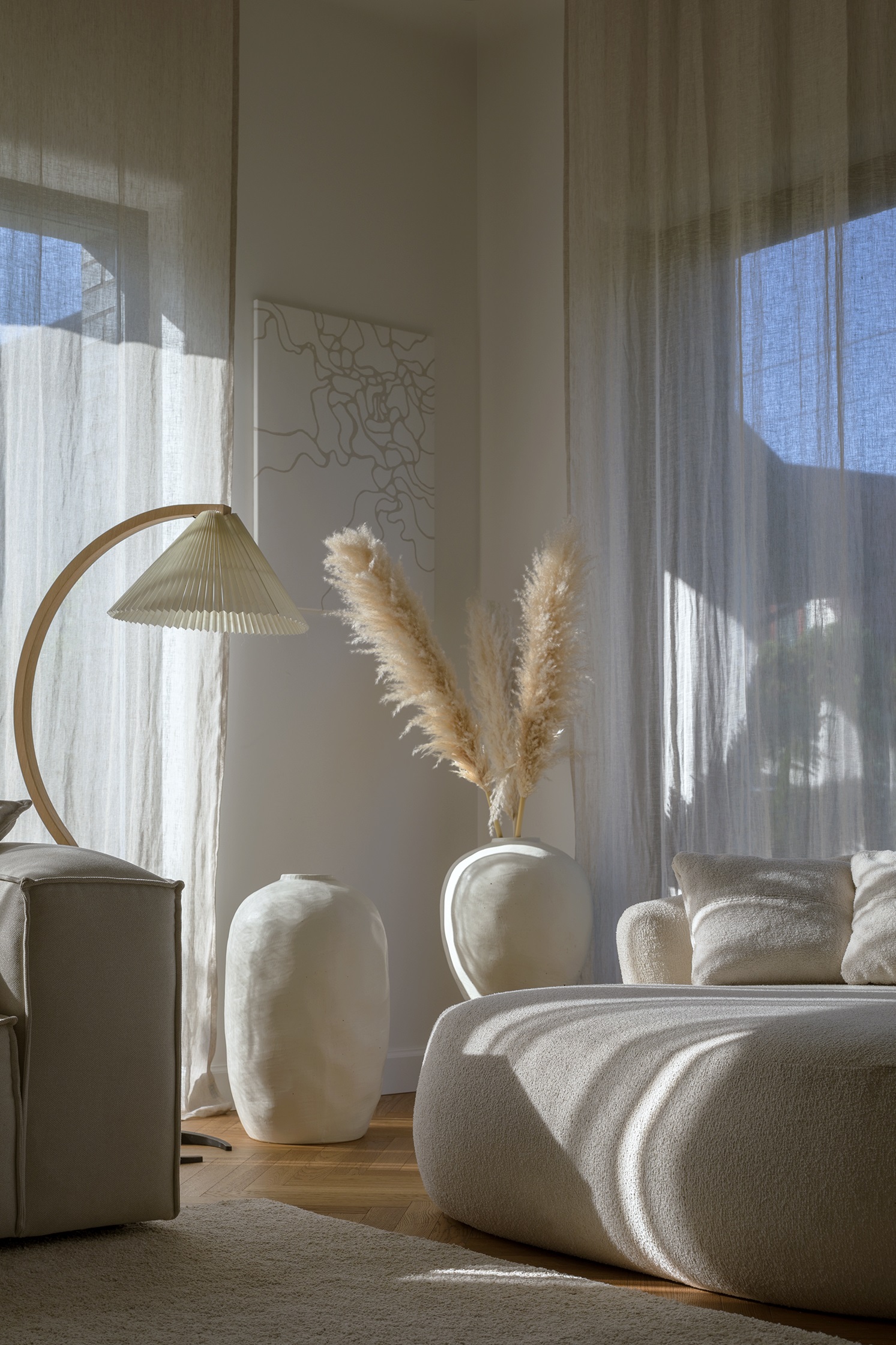
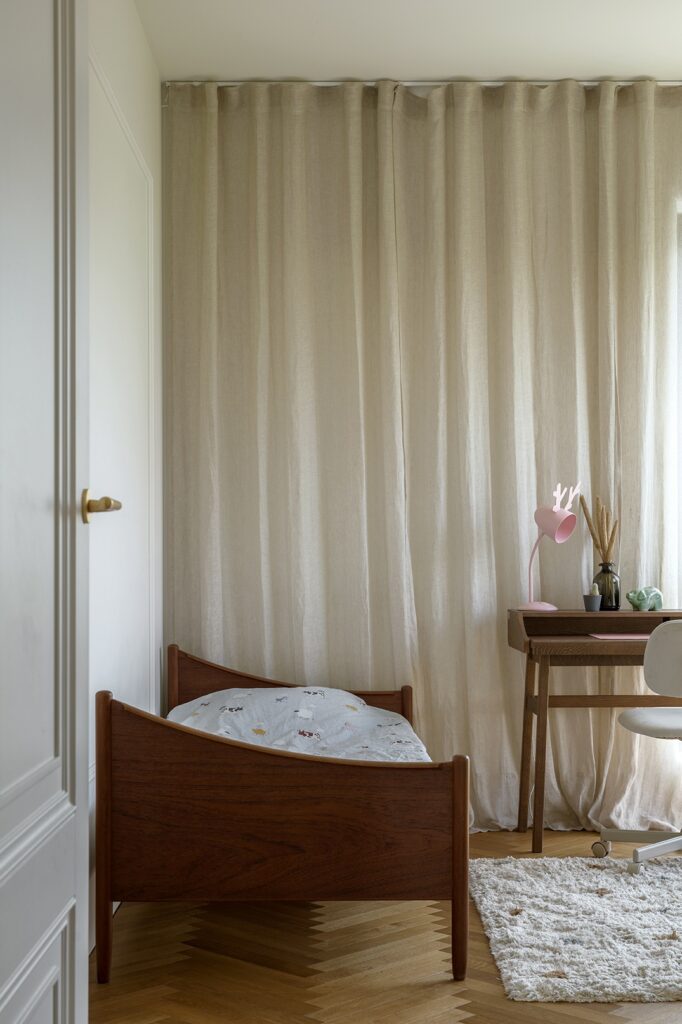
Linen, cotton, and wool have distinct textures and interact beautifully with light. Linen curtains gently filter the light, a wool rug improves acoustics and adds warmth to the space, and natural upholstery fabrics bring a sense of softness.
It’s worth paying attention not only to the composition but also to the texture. It is precisely the combination of smooth, matte, soft, and more rugged surfaces that makes even a monochromatic interior feel multidimensional.
In such cases, there’s no need for many decorations—the material itself becomes the decoration.
5. Natural materials work best together
The secret to a successful interior isn’t about using as many high-end materials as possible. What matters far more are their proportions and consistency.
In the House of Curves, we used a limited palette: wood, linen, stone, and microcement paired with white, grays, and warm, natural shades. Thanks to this, the various rooms tell a single story, even though each serves a different function.
Natural materials also harmonize well with rounded and organic forms. In our design, curves appear in the architecture, built-in furniture, countertops, window recesses, and the staircase. Light gently glides across these surfaces, causing the interior to change its character throughout the day.
It is precisely this combination of light, material, and form that often determines whether we perceive a space as harmonious.
Of course, “natural” doesn’t necessarily mean “rustic”
Natural materials work well with Japandi and soft minimalism interiors, as well as with modern classic, quiet luxury, and very contemporary architecture.
The key lies in how they’re used.
At Five Cell, when designing interiors for homes and apartments, we select materials as part of the overall concept—along with the functional layout, lighting, color palette, and custom-designed furniture. As a result, wood, stone, and natural fabrics aren’t random additions but form a cohesive interior language.
If you’re interested in interior design in Warsaw and want a space with a natural, timeless character, we can create a design tailored to the architecture of the space and your lifestyle.
Because a well-designed interior shouldn’t just follow trends. It should age well, alongside the home and its residents.
Translated with DeepL.com (free version)